
Iowa Fish Stocking

Bjornsen Pond Management helps clients from across Iowa find the exact size and species of fish they need for their lake or pond. We partner with the best fish hatcheries in Alabama, Texas, Oklahoma, Kansas, Arkansas, Missouri, Iowa, Minnesota, North Dakota, Wisconsin, Michigan, Ohio, Indiana, and Illinois.

Bjornsen Pond Management specializes in initial pond stocking, corrective stocking, and forage fish stocking.

Use our Iowa Fish Stocking Worksheet!

Bjornsen Pond Management will provide you with pond audits with electrofishing, fish stocking, advice, and products to make your pond a trophy pond!

Fish Selection

Our fish stocking programs use only genetically superior stock from the nation’s best breeders. We can help you develop a specialized fishery with focus on: Largemouth Bass, Smallmouth Bass, Hybrid Striped Bass, Albino Catfish, Channel Catfish, Bluegill, Hybrid Bluegill, Red Ear Sunfish, Minnow, Golden Shiner, Yellow Perch, Walleye, Northern, Muskie, Grass Carp, Crappie, Rainbow Trout, and Brown Trout.

Fish availability from our growers is hard to predict!—quantities of certain species as well as seasonal timing change dramatically from year to year. Reserving your fish and fish stocking period will ensure you get what you want when you want it.
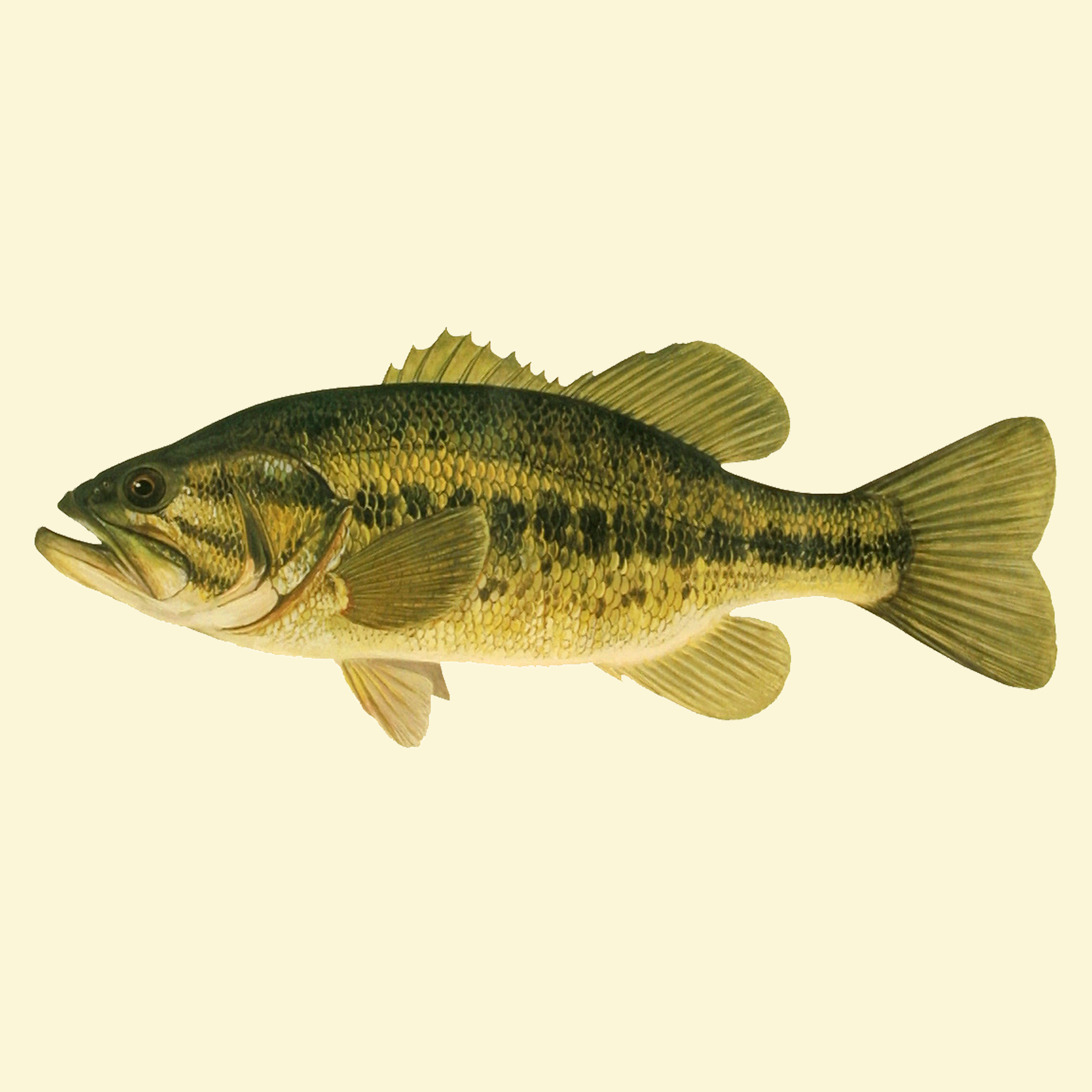
  • Largemouth Bass
    Largemouth Bass

    Courtesy of Iowa DNR

    A slender, streamlined sunfish, with a very large mouth, with the upper jaw extending far past the rear margin of the eye when the mouth is closed (except in small young). The spiny and soft portions of the dorsal fin are almost completely separated by a deep notch. The middle of the green shaded body has a broad continuous dark stripe, but this sometimes becomes indistinct in large adults and fish taken from turbid water. The belly is greenish white or yellowish, and the eye is usually gold. The pyloric caeca, finger-like extensions at the junction of the stomach and intestine, are forked, and the tail fin in young Largemouth Bass is distinctly bicolored — not tricolored as in Spotted Bass and Smallmouth Bass. The rear part at the fin is much darker than the basal part.

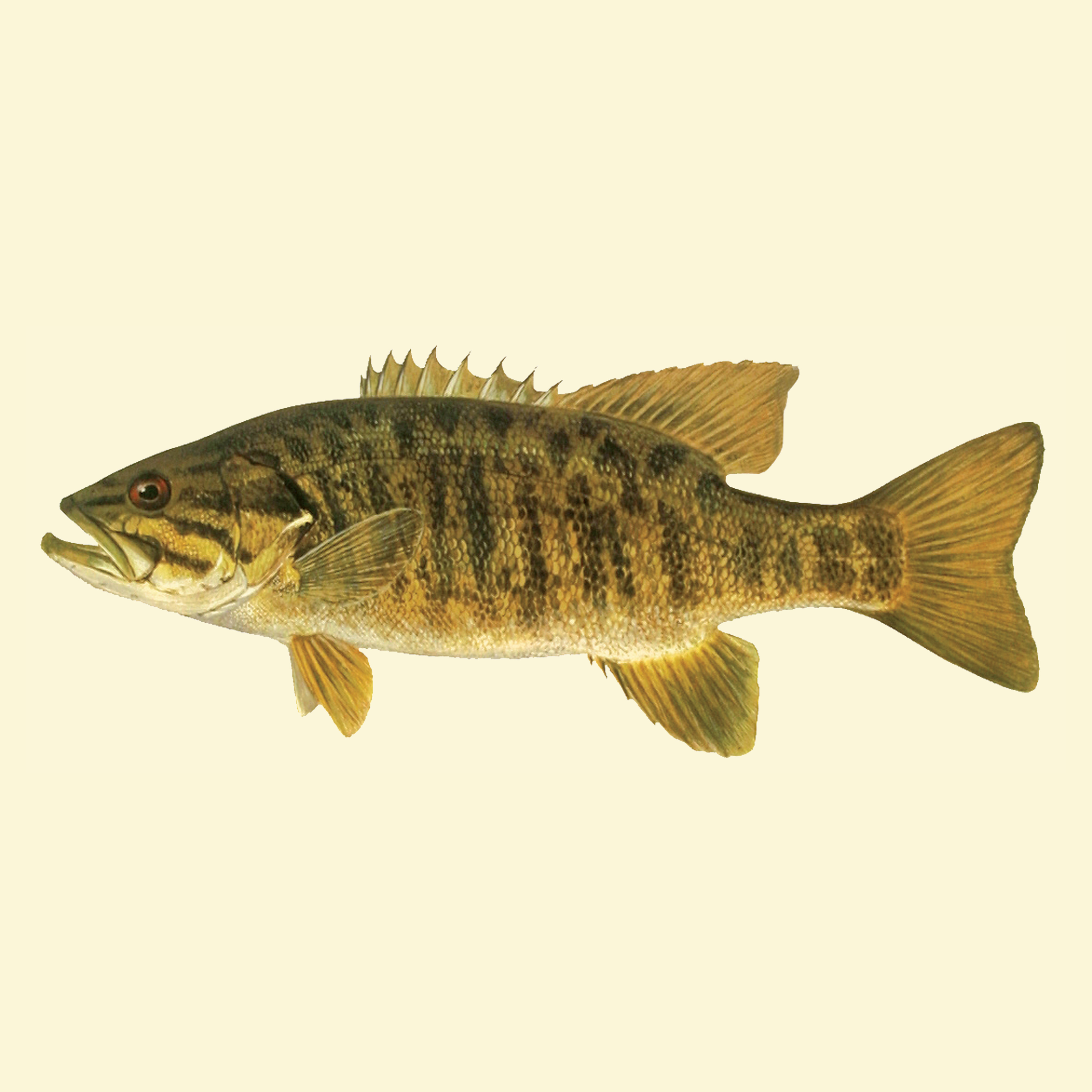
  • Smallmouth Bass
    Smallmouth Bass

    Courtesy of Iowa DNR

    A slender, streamlined-shaped fish with a moderately large mouth, where the upper jaw reaches about to the rear margin of the eye in adults. Spiny and soft parts of the dorsal fin are broadly connected with only a shallow notch between the lobes. The body is golden green on the sides and back with faint wavy olive blotches evenly spaced along the sides. Five olive green bars radiate backward from the eye, and one forward to the end of the snout. The tail fin in young smallmouth is tri-colored with a black vertical bar separating the yellowish fin base. Pyloric caeca are not forked in contrast to forked pyloric caeca in the closely related Largemouth Bass.

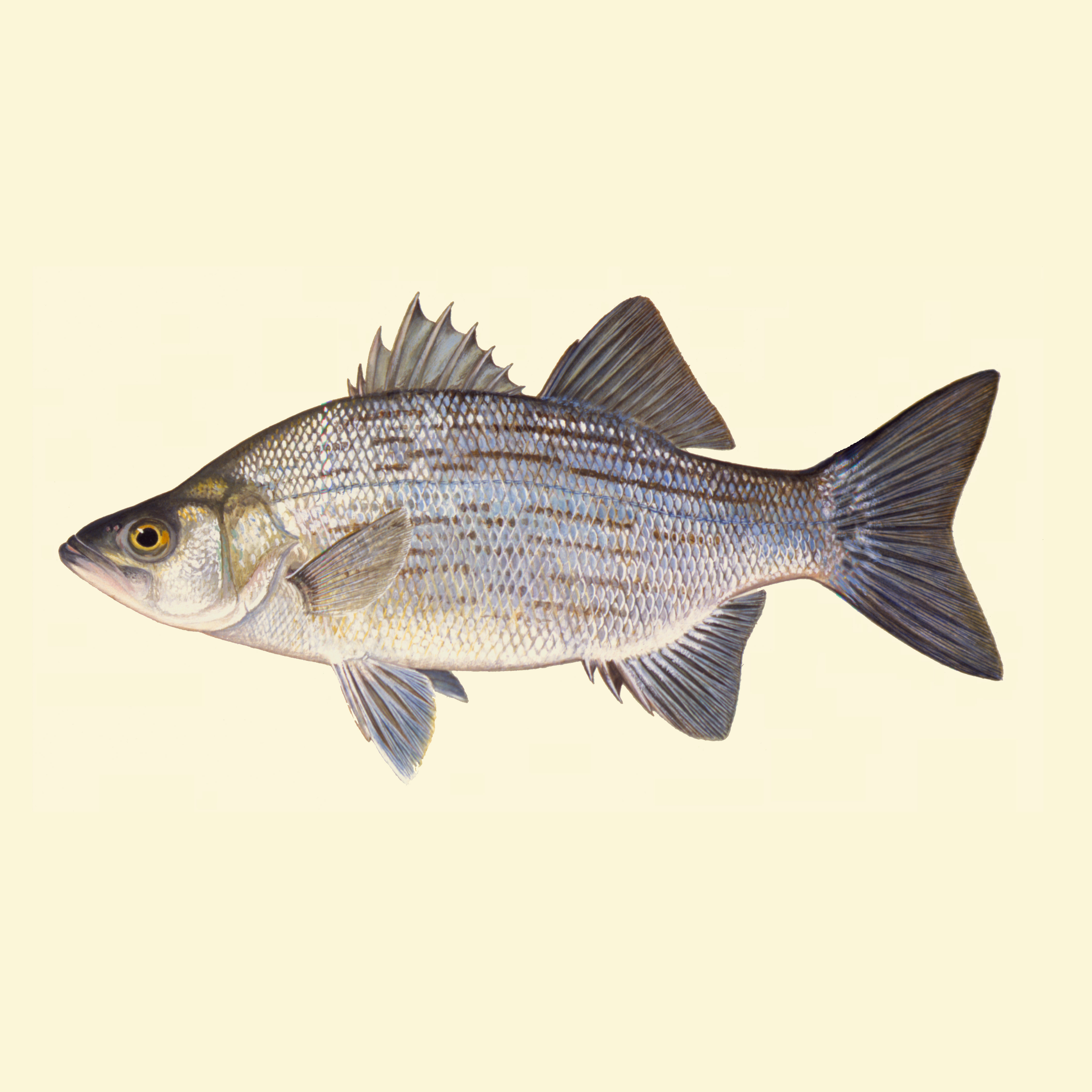
  • Hybrid Striped Bass
    Hybrid Striped Bass

    Courtesy of Iowa DNR

    Like most hybrids, this fish has features of both parent species. It has the deep flat body, small head and the distinct back arch of white bass; yet it has the dark gray or blue silvery body coloration and thick dark longitudinal body stripes of the ocean striped bass. Although the hybrid closely looks like white bass and striped bass, it differs slightly in several features. Two distinctive tooth patches are near the middle of the tongue. The first stripe below the lateral line is distinct and complete to the tail. Positive identification of Hybrid Striped Bass is easier when viewed alongside purebred parent fish. There are obvious external differences, but these are not so apparent when viewed alone. From observations in other localities, this fish seldom exceeds 10 pounds when fully grown.

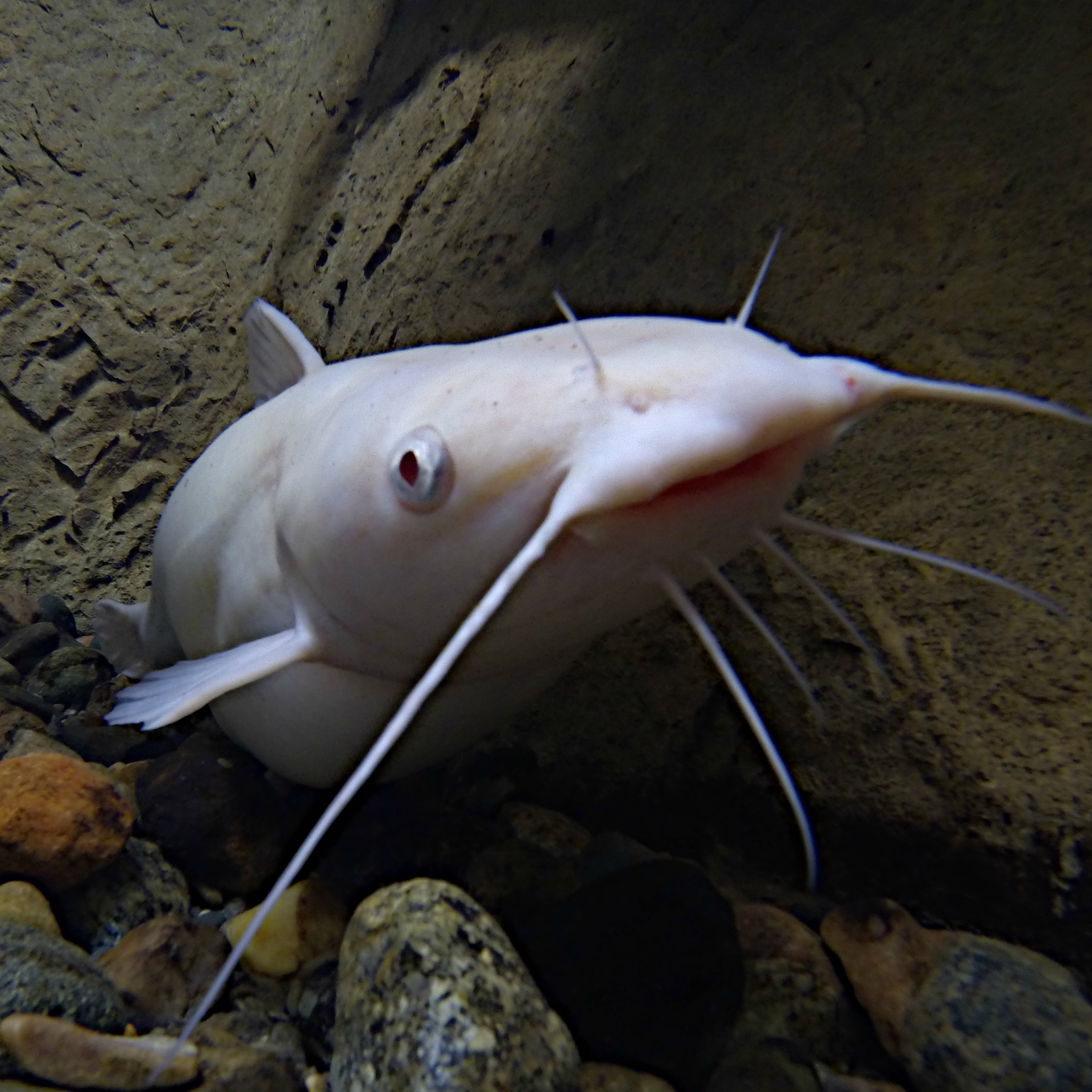
  • Albino Catfish
    Albino Catfish

    Albino Catfish

    Catfish (or catfishes; order Siluriformes or Nematognathi) are a diverse group of ray-finned fish. Named for their prominent barbels, which resemble a cat’s whiskers, catfish range in size and behavior from the three largest species, the Mekong giant catfish from Southeast Asia, the wels catfish of Eurasia and the Piraíba of South America, to detritivores (species that eat dead material on the bottom), and even to a tiny parasitic species commonly called the candiru, Vandellia cirrhosa. There are armour-plated types and there are also naked types, neither having scales. Despite their name, not all catfish have prominent barbel. Members of the Siluriformes order are defined by features of the skull and swimbladder. Catfish are of considerable commercial importance; many of the larger species are farmed or fished for food.

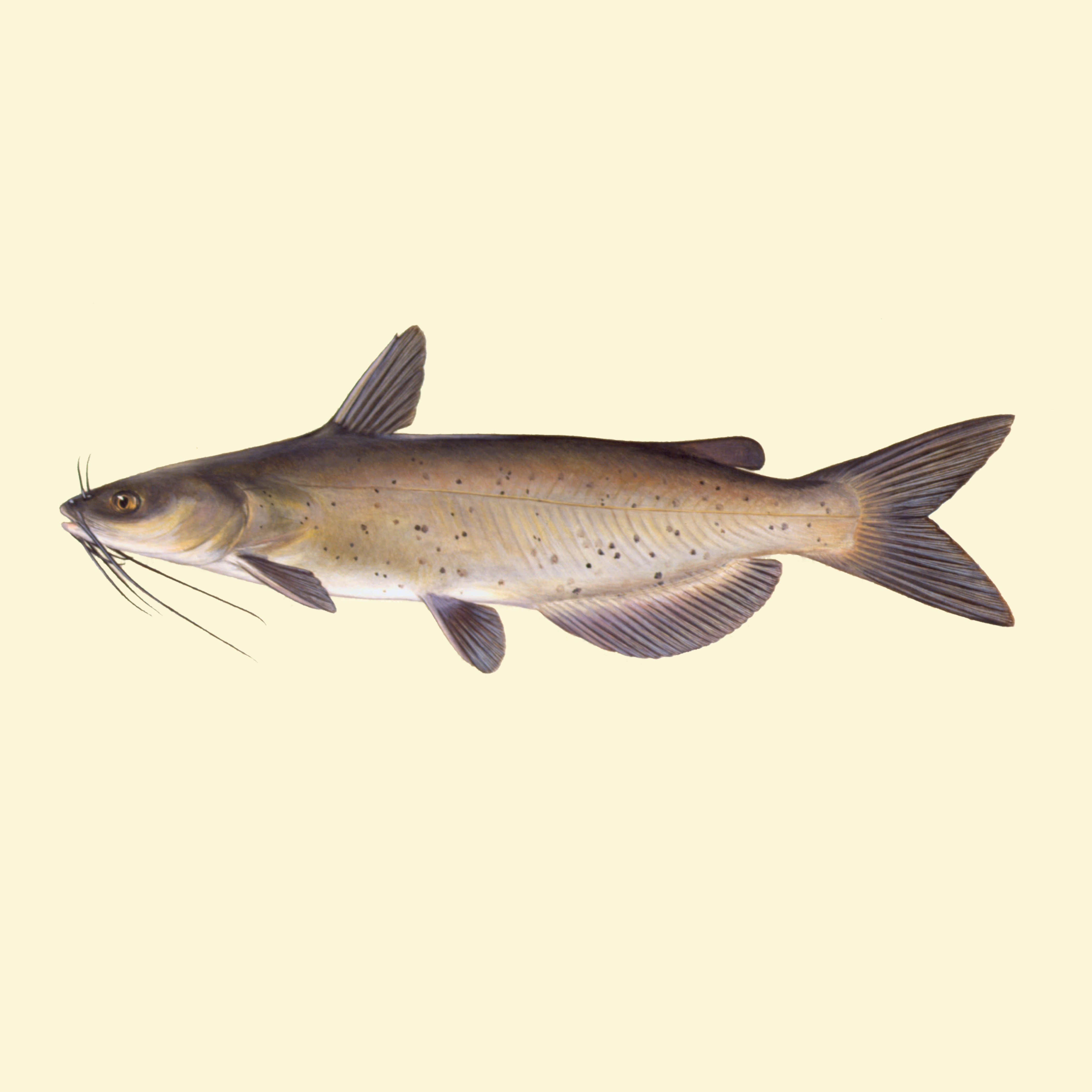
  • Channel Catfish
    Channel Cat

    Courtesy of Iowa DNR

    Body color varies from silvery-gray on the top side to light on the underside, depending mostly on the clarity of the water. The body is profusely marked with dark pigmented spots, which are usually unclear in large adults. Young individuals, under 2- or 3-inches long, often lack these spots. There are 24 to 29 soft rays in the anal fin, and this fin is about two-sevenths the standard length. The posterior margin of the adipose fin is free. The tail is deeply forked, which is unlike all the other catfishes except the Blue Catfish. The eyes are large, but the head is small, slender and sub-conic. The air bladder has two lobes which are laterally paired to look as one at first glance. The upper jaw is slightly longer than the lower jaw.

  • Bluegill
    Bluegill

    Courtesy of Iowa DNR

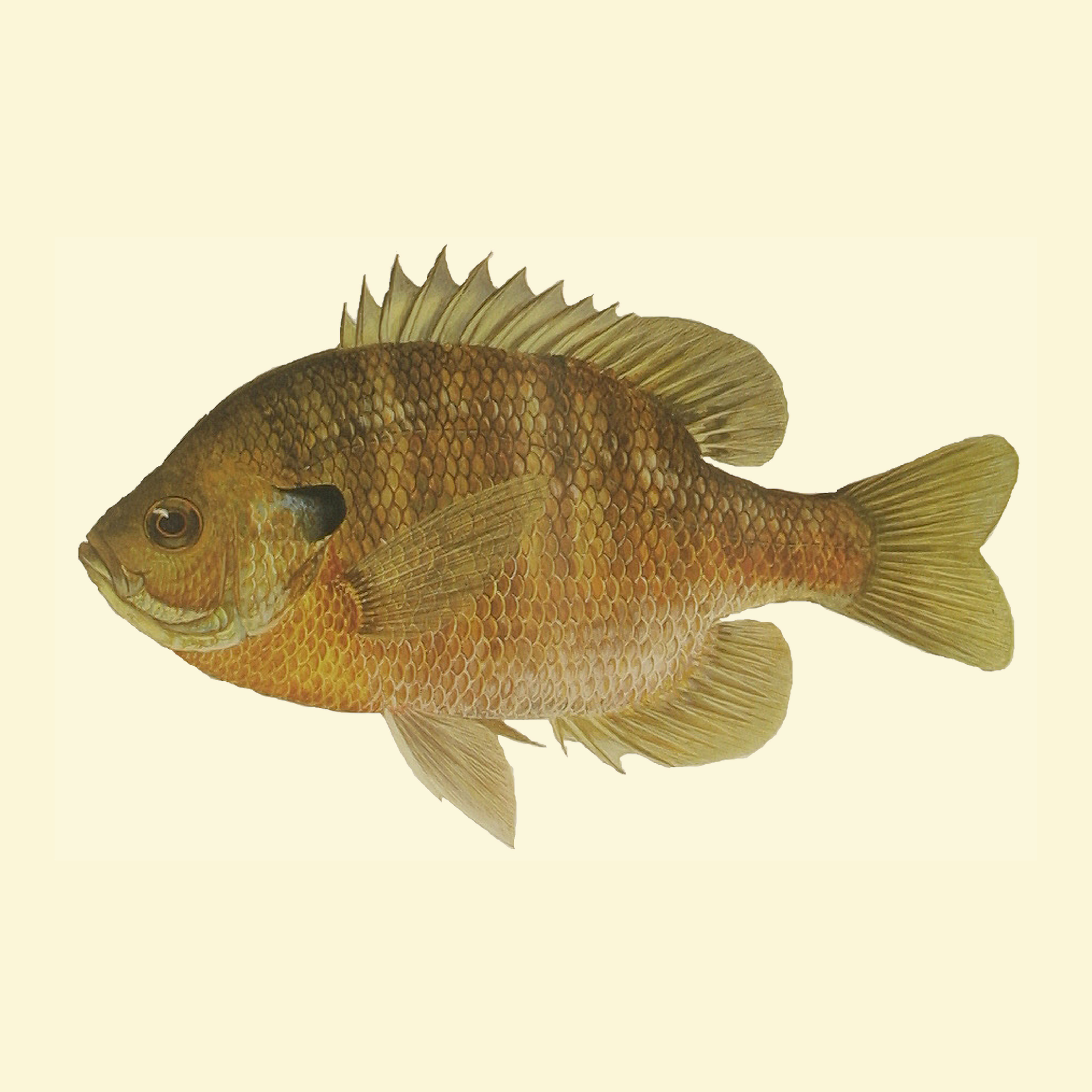
    A deep, slab-sided sunfish with a small mouth. The upper jaw does not reach the front of the eye when the mouth is closed. The spiny dorsal fin has 10 spines and is joined broadly to the soft dorsal fin, but there is no notch. The pectoral fins are long and pointed and extend past the eye when they are bent in a forward position. There is usually a black spot or blotch near the base of the soft dorsal fin and a black, flexible tip on the gill cover. The back and sides are dark olive green with emerald and brownish reflections. The breast and belly are yellow or reddish-orange. Males in breeding colors often have a deep red, almost dark brown breast. The sides usually display vertical bars, but these are more prominent in smaller fish. The chin and gill covers are bright blue, giving the bluegill its name.

  • Hybrid Bluegill
    Photo Not Yet AvailableThe Hybrid Bluegill is a cross between a Male Bluegill and a Female Green Sunfish, and is sometimes referred to as a Hybrid Sunfish. As a result of the cross the Hybrid Bluegill is ~80-90% male, giving it a reduced reproductive potential and making it an ideal choice for those ponds prone to Bluegill stunting. Also, when Hybrid Bluegill reproduce in a pond, their offspring is generally not very successful or desirable, which makes it necessary to restock occasionally. When you stock Hybrid Bluegill, you also have to stock a supplemental forage species for the Largemouth Bass, like the Fathead Minnow or Golden Shiner. In a perfect situation, the minnows or shiners will reproduce and provide feed for the bass. However, the establishment of a forage species can be difficult because Hybrid Bluegill readily consume minnow & shiner fry as they hatch and Largemouth Bass readily consume the adults.
  • Red Ear Sunfish
    Red Ear Sunfish, fish stocking

    Courtesy of Iowa DNR

    A deep, slab-sided sunfish with a small mouth similar in appearance to Bluegill and Pumpkinseed. The upper jaw does not reach past the front of the eye when the mouth is closed. The dorsal fin has 10 spines and is connected to the soft dorsal fin without the presence of a notch. The pectoral fins are pointed and long. The earflap is rounded and has a thin and flexible margin. The dorsal fin is without spots, and the sides of the head do not have bluish lines as in Pumpkinseed. The back and sides are golden or light olive green, usually marked by several dark vertical bars. But these disappear in large fish. The ear flap has a whitish border and has a prominent red or orange spot in adults, hence the name redear. The fins are greenish without spots.

  • Minnow
    Fathead Minnow

    Courtesy of Iowa DNR

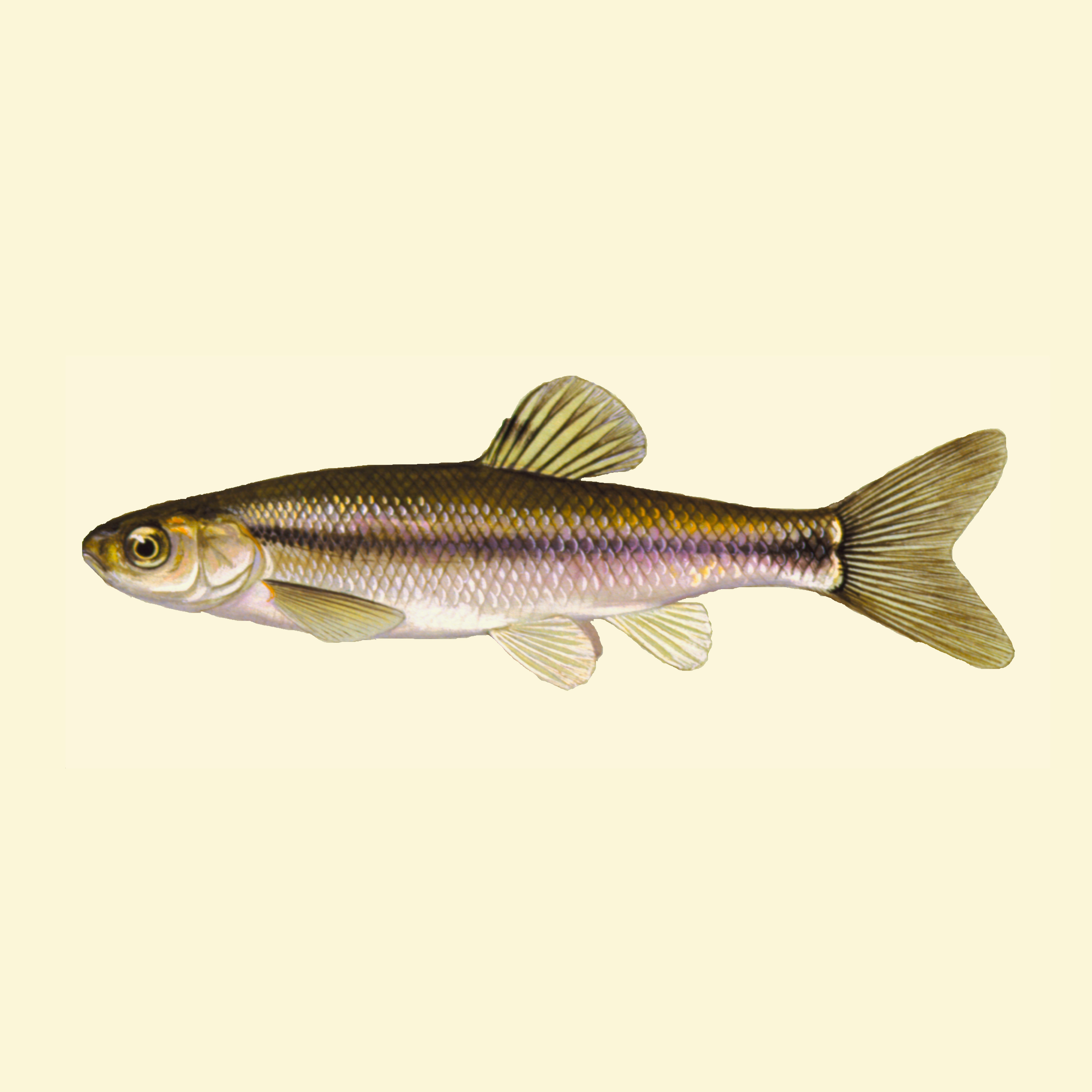
    The Fathead Minnow has a stout body that is moderately compressed laterally with a broad flat area just before the dorsal fin. A typical Pimephales, they have a shortened and closely attached first ray in the dorsal fin and smaller, crowded scales in front of the dorsal fin. The small, terminal mouth is oblique and without a barbel. Slender, slightly hooked pharyngeal teeth are arranged in a 4-4 array. The body is dark olive above with a tinge of copper or brass behind the head and along the sides. The sides are lighter with a silvery hue, and the belly is white. A dusky band or blotch appears in the front and rear rays of the dorsal fin, which helps distinguish them from the Bullhead Minnow and Bluntnose Minnow. The lateral band is faint in fish from turbid waters and prominent in specimens from clear water. An incomplete lateral line, which does not reach to the caudal peduncle, has 42 to 48 scales. Intestine length is about twice the body length and the peritoneum is black. Dorsal and pelvic fins have 8 rays, while the anal fin has 7 rays, and the pectoral fins have 15 or 16 rays. Spawning males develop a swollen, black head with breeding tubercles appearing in three rows on the snout. Typical males are light silvery behind the opercle to the pectoral fins; then a dark bar extends to the insertion of the dorsal fin followed by a light bar to about mid-way along the dorsal fin.

  • Golden Shiner
    Golden Shiner

    Courtesy of Iowa DNR

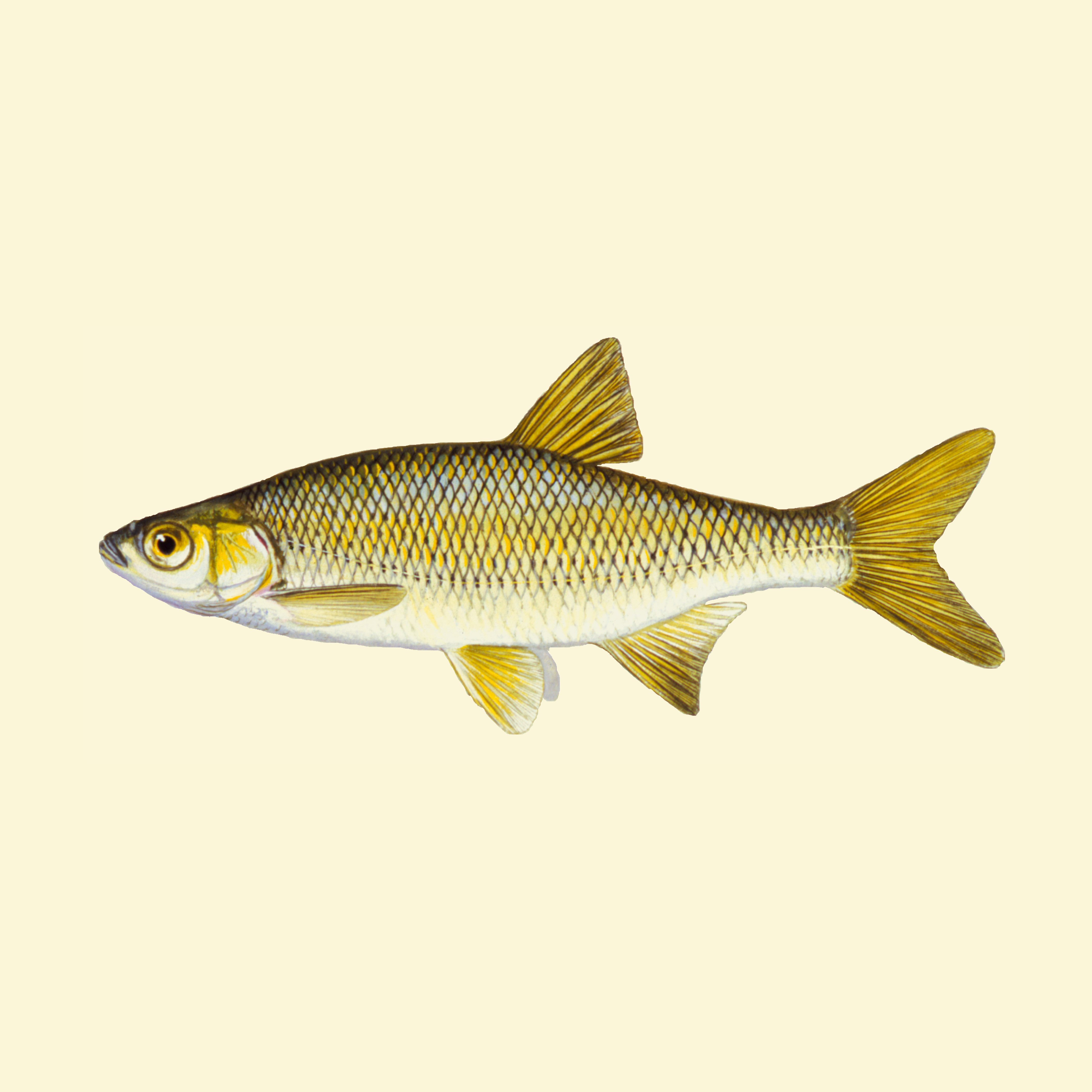
    A large, slab-sided minnow. The body is dark green above with olive sides, brassy belly, and a distinctive golden sheen. Golden Shiners have 3 easily distinguishable characters. The lateral line is strongly curved below the center line. The anal fin is long, with 11-13 rays. There are no scales covering the belly ridge between the pelvic fins and anus. The mouth is small, terminal and oblique, and the jaw does not extend to the eye or have a barbel. The dorsal fin, inserted behind the pelvic fin, has 8 rays, while the pelvic fins have 9 rays, and the pectoral fins have 15 to 17 rays. A complete lateral line has 45 to 52 scales. Young Golden Shiners are very different from adults, being silvery, not as slab-sided, and have a distinct lateral stripe from eye to caudal fin.

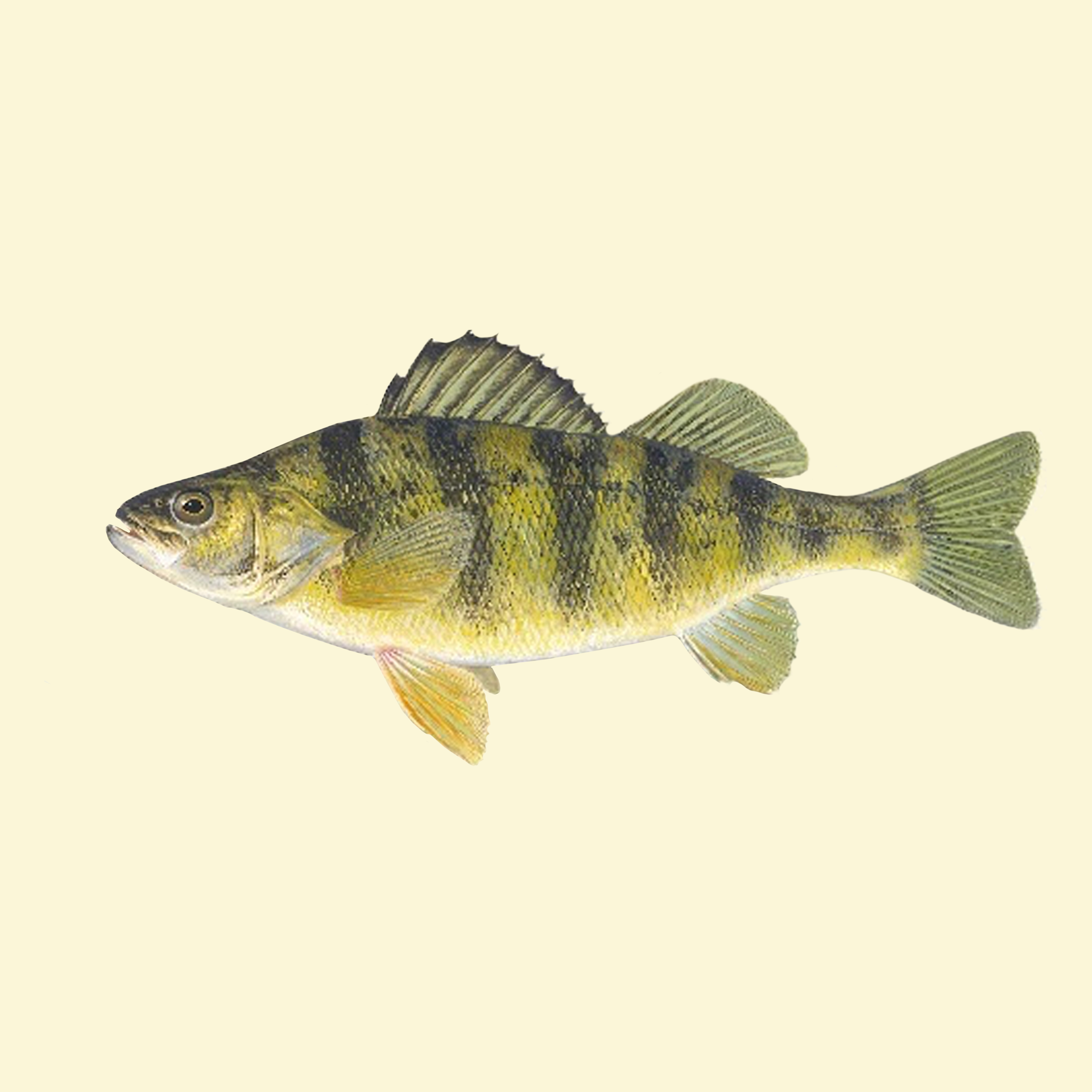
  • Yellow Perch
    Yellow Perch

    Courtesy of Iowa DNR

    The sides are bright yellow to brassy green, with seven dark, vertical bars. The belly is lighter, and the back is a dark olive-green. There are no canine teeth on the jaws or roof of the mouth. The dorsal fin has 12 to 13 soft rays and 7 or 8 rays in the anal fin. Scales in the lateral line range from 57 to 62. The cheeks are covered with 8 to 10 rows of extended scales. The somewhat humpbacked look of the fish is due to the head being slightly concave above the eyes.

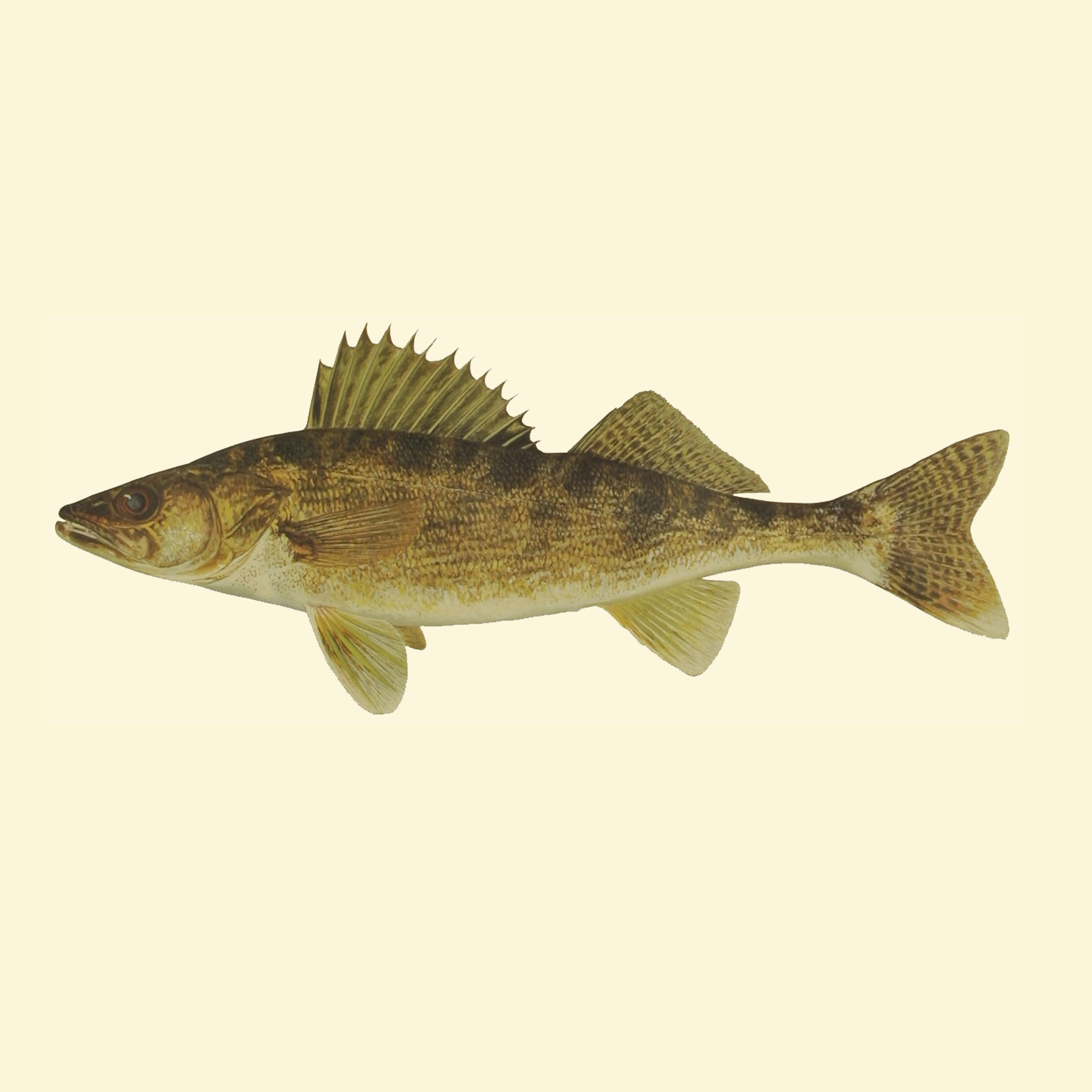
  • Walleye
    Walleye

    Courtesy of Iowa DNR

    Large, whitish glossy eyes and strong canine teeth. A brassy olive-buff color, sometimes shadowing to yellowish sides and white beneath. The caudal fin has a silver or milk-white tip on the lower lobe. There are no distinct dark bars or mottlings on the sides of the body, but instead an overall mottling of brown or black. Spots on the anterior dorsal fin are lacking, but there is one large dark spot or blotch near the base on the last 2 to 3 spines of the posterior dorsal fin. There are 19 to 22 soft rays in the dorsal fin and 12 to 14 in the anal fin. The lateral line has 80 to 89 scales. The cheeks are sparsely scaled.

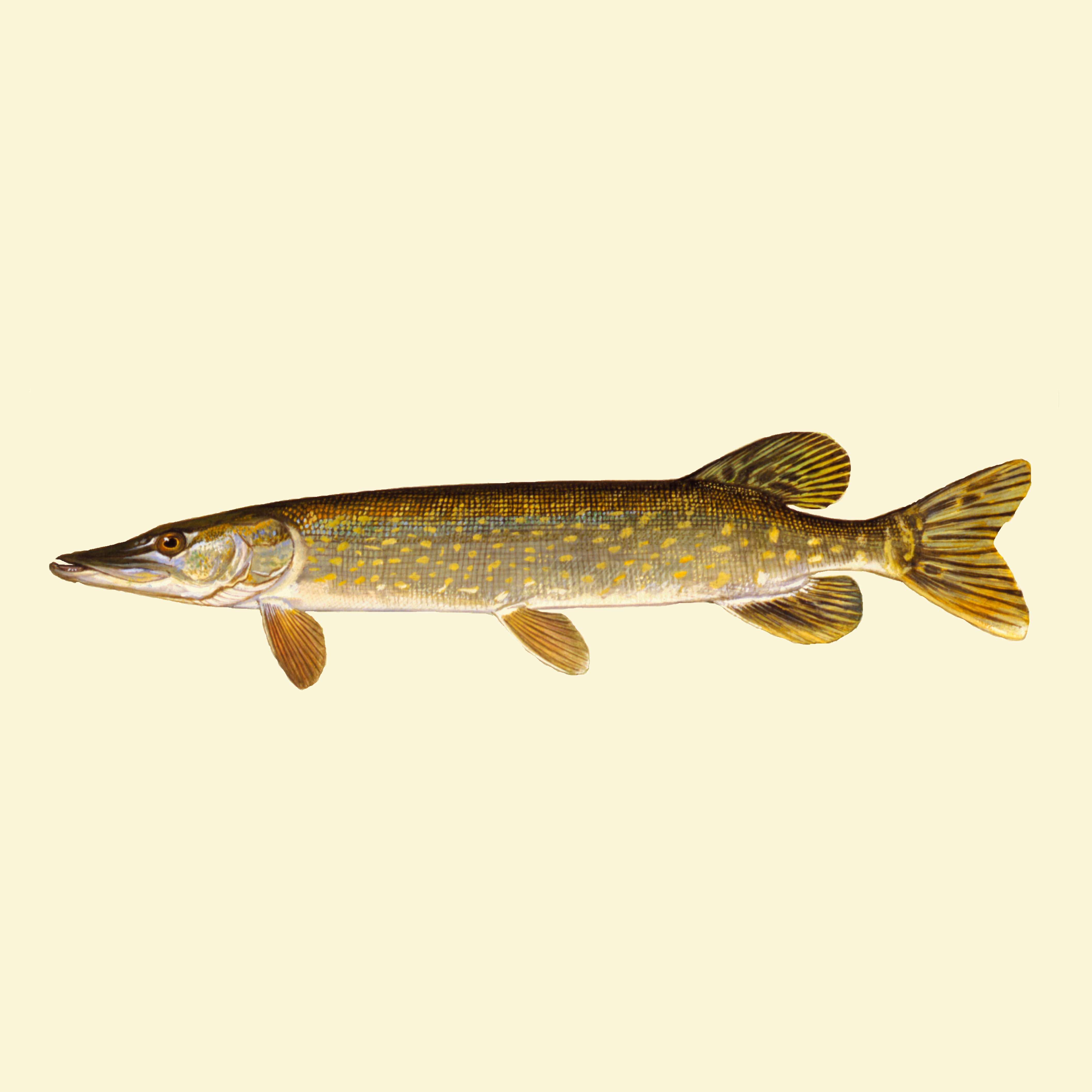
  • Northern
    Northern Pike

    Courtesy of Iowa DNR

    An elongated fish with a long head, which is depressed forward into a pair of large duck-bill shaped jaws imbedded with many canine teeth. Body color varies, depending on the waters from which it is taken. It usually is bluish-green to gray on the back, and the markings on the sides are irregular rows of light yellow or gold spots. These little markings distinguish it from the Grass Pickerel and Muskellunge. The dorsal fin is far back on the body and has 16 to 19 soft rays. The cheeks are fully scaled, but the lower half of the opercle is scaleless. There are 14 to 16 branchiostegal rays in the membrane just below the gill cover. There is never more than 10 sensory pores along the undersides of the lower jaws. The lateral line has about 119 to 128 scales. This fish species reaches 3- to 4-feet long and weighs over 30 pounds. Fish weighing 10 pounds or more are fairly common in the larger lakes and rivers.

  • Muskie
    Muskie, fish stocking

    Courtesy of Iowa DNR

    The Muskellunge differs from other pikes in having the upper half of the cheeks and opercles lightly scaled and the lower portion of these parts scaleless. The lower jaw has a row of 6 to 9 pores along each side. There are 16 to 19 branchiostegal rays, usually 19 rays in the dorsal fin, and 147 to 155 cycloid scales along the lateral line. The color of Muskellunge varies; it is usually olive to dark gray with dark over markings on the sides. When present, these markings will have dark spots or bars on a light background.

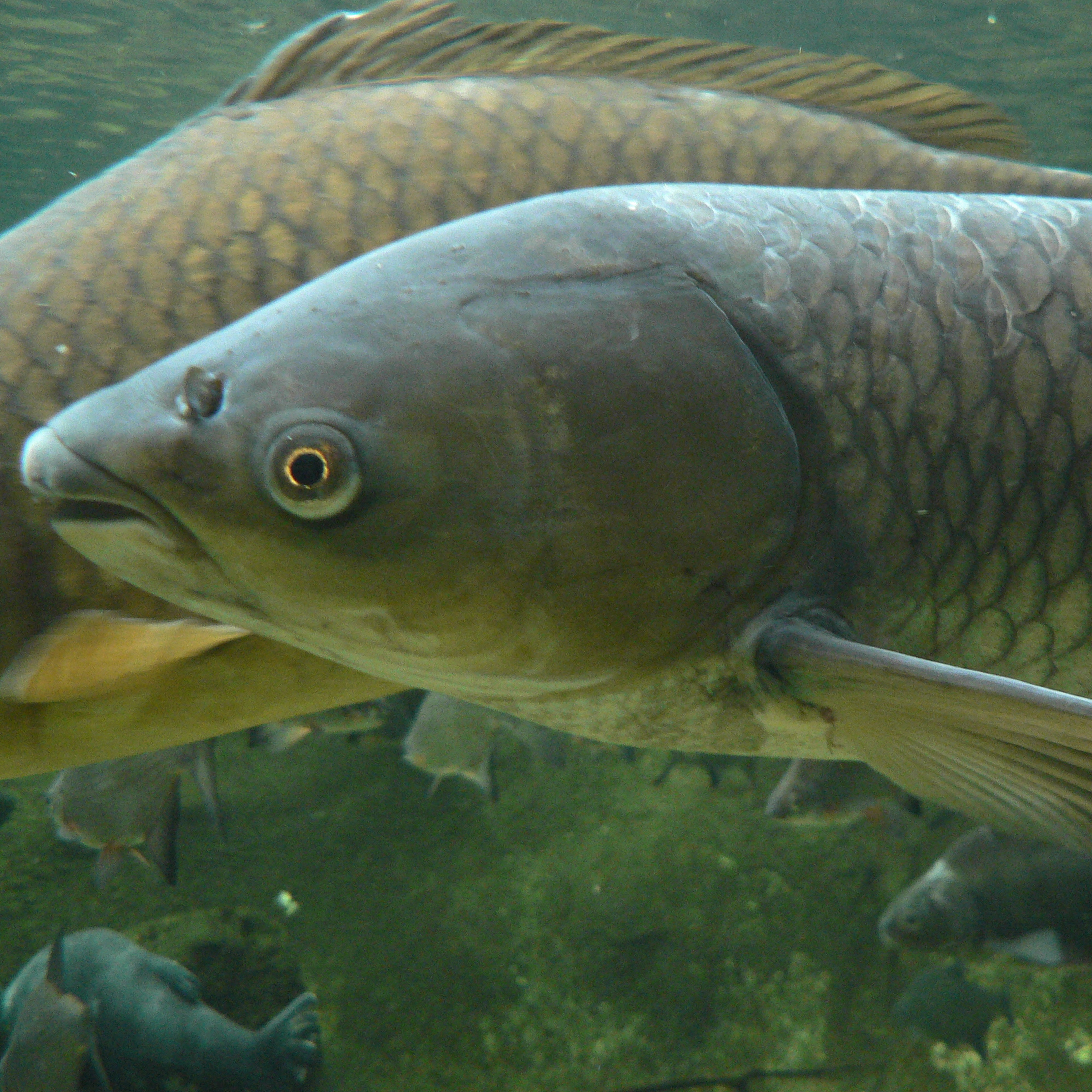
  • Grass Carp
    Grass Carp

    Courtesy of Peter Halasz

    Elongate, chubby body that is torpedo shaped. The body is dark olive, shading to brownish-yellow on the sides with a white belly and large slightly outlined scales. The terminal mouth is slightly oblique with non-fleshy, firm lips, and no barbels. The complete lateral line has 40 to 42 scales. The dorsal fin has 8 to 10 soft rays, and the anal fin is set closer to the tail than most cyprinids. Broad, ridged pharyngeal teeth are arranged in a 2, 4-4, 2 formula.

  • Crappie
    Black Crappie

    Courtesy of Iowa DNR

    A silvery-speckled, deep-bodied, slab-sided sunfish with a large mouth. The upper jaw reaches past the middle of the eye when the mouth is closed. It usually has a dark back with many green or blackish spots unevenly spaced over the sides. There are no distinct vertical bars as in white crappie. The body is somewhat deeper in proportion to its length, and the dorsal, tail, and anal fins are strongly netted with black making it look like a dark-colored fin with many whitish spots. The spiny dorsal and soft dorsal fins are broadly connected without being notched. The anal fin is nearly as long and as large as the dorsal fin and has 6 spines. The dorsal fin has 7 or 8 dorsal spines, and the length of the dorsal fin base is equal to the distance from the eye to the front of the dorsal fin.

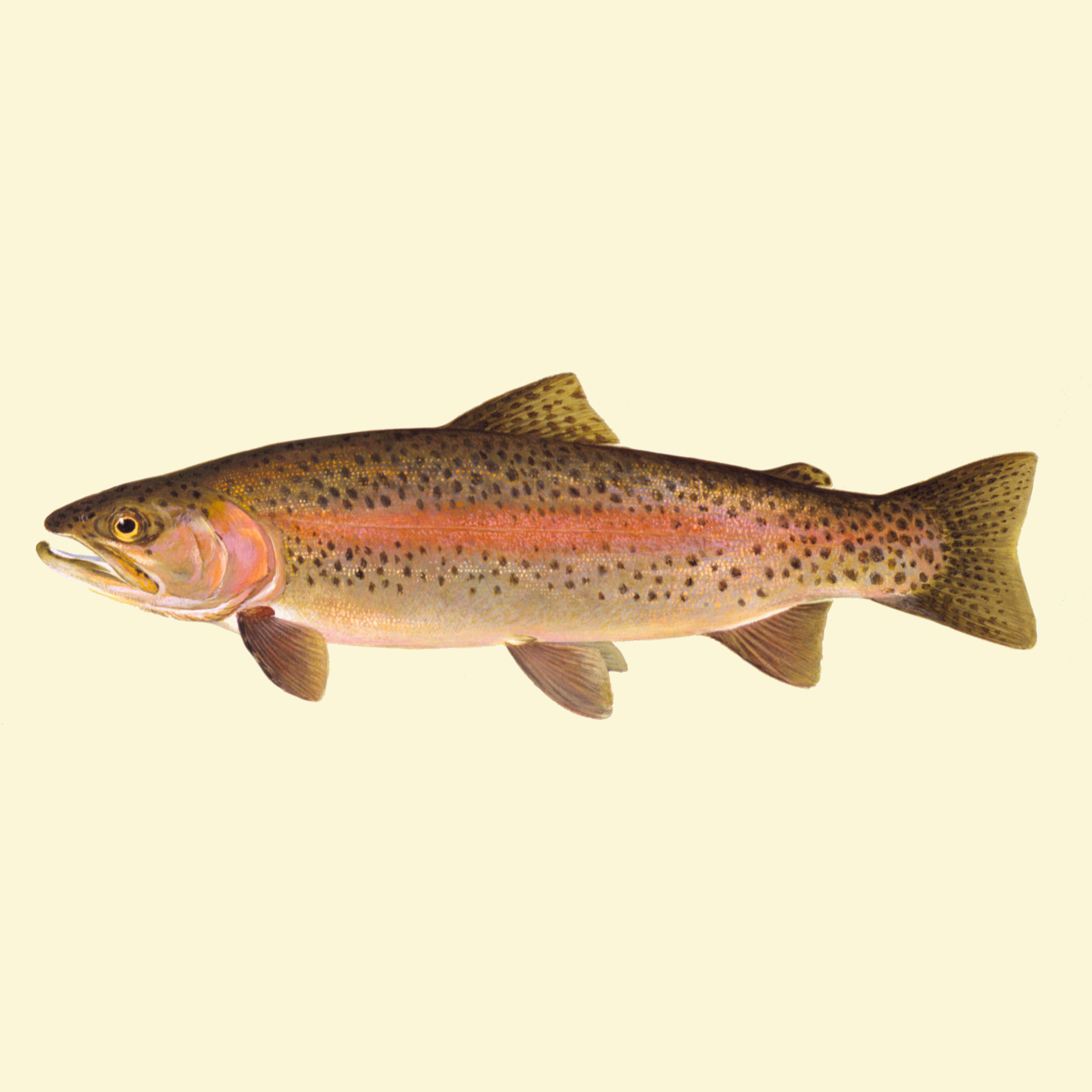
  • Rainbow Trout
    Rainbow Trout

    Courtesy of Iowa DNR

    Olive to greenish-blue over most of the upper body, fading to a silvery-white along the belly. They are most easily separated from the other trout species by the strikingly prominent pink-red horizontal stripe that extends down each side of the fish. The sides, back, dorsal and caudal fins have small black spots continuing to the distal end of the caudal fin. Like most trout, there are sharp teeth on the vomer in the roof of the mouth. Scale counts along the lateral line range from 135 to 155.

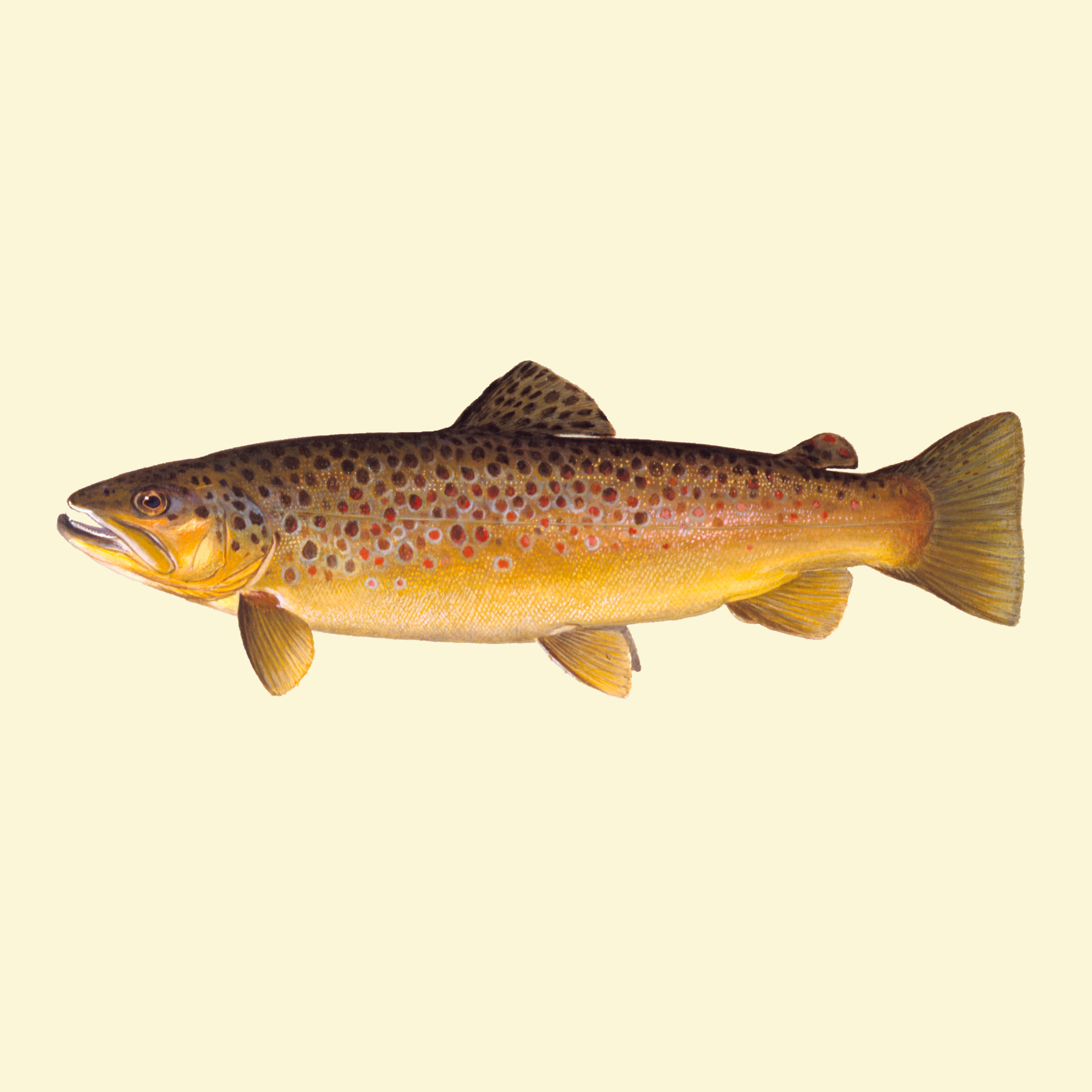
  • Brown Trout
    Brown Trout

    Courtesy of Iowa DNR

    As its name implies, this trout is generally brown, shading into a background of green and yellow. Spots on the sides are larger and more prominent than on other trout, and they are often bordered with a light-colored “halo”. Few, if any, dark spots are found on the tail fin. The leading edge of all belly fins on Brown Trout is yellow or about the same color as the body. Lower portions of young Brown Trout are yellow, fading to gray or white underneath. Males, during the breeding season, often have vivid yellow to reddish-yellow colors along the belly and a sharply hooked lower mandible. The vomer, a bony structure in the roof of the mouth, has sharp teeth in an alternating or “zig-zag” row. There are 115 to 150 scales in the lateral line.