Pond Weed and Algae Control
Expert pond weed and algae control, plus the products to do it yourself
Expert pond weed and algae control, plus the products to do it yourself
Pond weed control keeps your pond healthy, good-looking, and fun to fish. Too many weeds or too much algae can choke a pond, crowd out fish, and ruin swimming and boating. Bjornsen Pond Management helps in two ways. First, our team builds and carries out vegetation control plans in our service area. Second, our online store ships herbicides, algaecides, and pond dyes to all lower 48 states.
Some plants are good for your pond. In fact, rooted plants give fish cover, food, and places to spawn. However, too many plants can upset a fishing pond’s balance and become a nuisance. Everyone has a different tolerance for pond plants. Still, many fisheries biologists consider plants overabundant once they cover more than 40% of a pond’s surface.
Pond weed and algae control starts with a conversation and plant identification. That “green stuff” that is taking over your pond’s surface is often made up of many plant species. Properly identifying the weeds is the first step. From there, we recommend the right mix of control methods for your pond and your goals.
Because weed problems often start with excess pond nutrients, such as phosphates and nitrates, we also look at the bigger picture, including land management, to assess the inflow of these nutrients. During electrofishing visits, we also do water clarity readings and a plant survey.
Contact us online, or call Kevin at (319) 350-2918 or Nick at (319) 432-5301.
The best pond weed control stops weeds before they start. For example, conservation practices in your watershed keep soil and nutrients out of the water. These include silt basins, wetlands, buffer strips, and grass waterways. In addition, deeper shorelines leave less shallow water where sunlight reaches the bottom, so rooted plants have less room to grow. Prevention is easiest to build in before a pond is dug.
When prevention is not practical, you can control pond weeds by hand or with tools. For instance, a lake and beach rake or an aquatic weed cutter clears weeds from swimming areas and docks. Other options include bottom blankets, shading, and lowering the water level. These methods work at any time of year, but the results are short-term.
Algae is a different story. For many pond owners, filamentous algae, also called string algae or pond moss, is the most frustrating weed problem of all. Like other algae, it feeds on excess nutrients that wash into the pond or build up in bottom muck.
String algae also raises a bigger concern: toxic blue-green algae. Blue-green algae is actually a type of bacteria (cyanobacteria), and some blooms produce toxins that can harm people, pets, and livestock. String algae does not turn into blue-green algae. However, the two thrive on the same conditions: excess nutrients (especially phosphorus), warm water, and calm weather. In addition, when string algae dies and rots, it releases its nutrients back into the water. As a result, a pond with heavy string algae is also at higher risk for a blue-green algae bloom.
The good news is that cutting nutrients helps with both problems. That is where beneficial bacteria come in. PondFit and MuckEater are non-chemical treatments that put natural bacteria to work. These bacteria break down muck and organic waste, and they use up nutrients that algae would otherwise feed on. So algae has less food to grow. For best results, start treatments early in the season, and pair them with aeration.
Grass carp, also called white amur, eat soft underwater weeds and can control them for years. However, they will not control algae or shoreline plants like cattails. A word of caution: stocking too many grass carp can actually increase algae and wipe out the plant cover your sport fish need. So the right number matters.
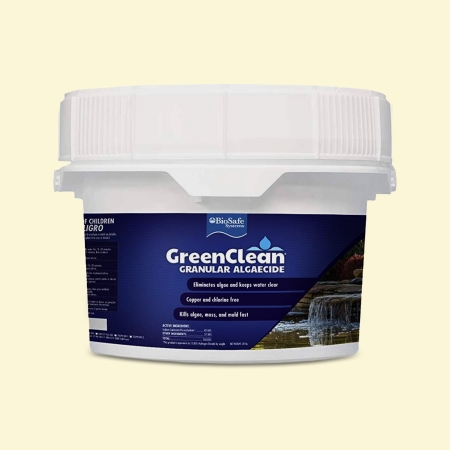
Aquatic herbicides and algaecides provide fast, seasonal pond weed control. Each product targets certain plants, so the key is matching the product to your weed. Also, always read and follow the label, since rules for treated water and fish safety vary by product and state.
Want to control pond weeds and algae without harsh chemicals? Our natural pond treatments are a great place to start. PondFit Beneficial Pond Bacteria and MuckEater Pelleted Pond Bacteria put natural bacteria to work. They break down muck and use up the nutrients that feed algae and weeds. As a result, your water gets clearer over time.
These products work best as prevention. So start as soon as the water warms in spring, and keep treating through the season. For better results, pair them with aeration and pond dye. However, bacteria will not clear a heavy bloom overnight. In that case, an algaecide may be needed first.